
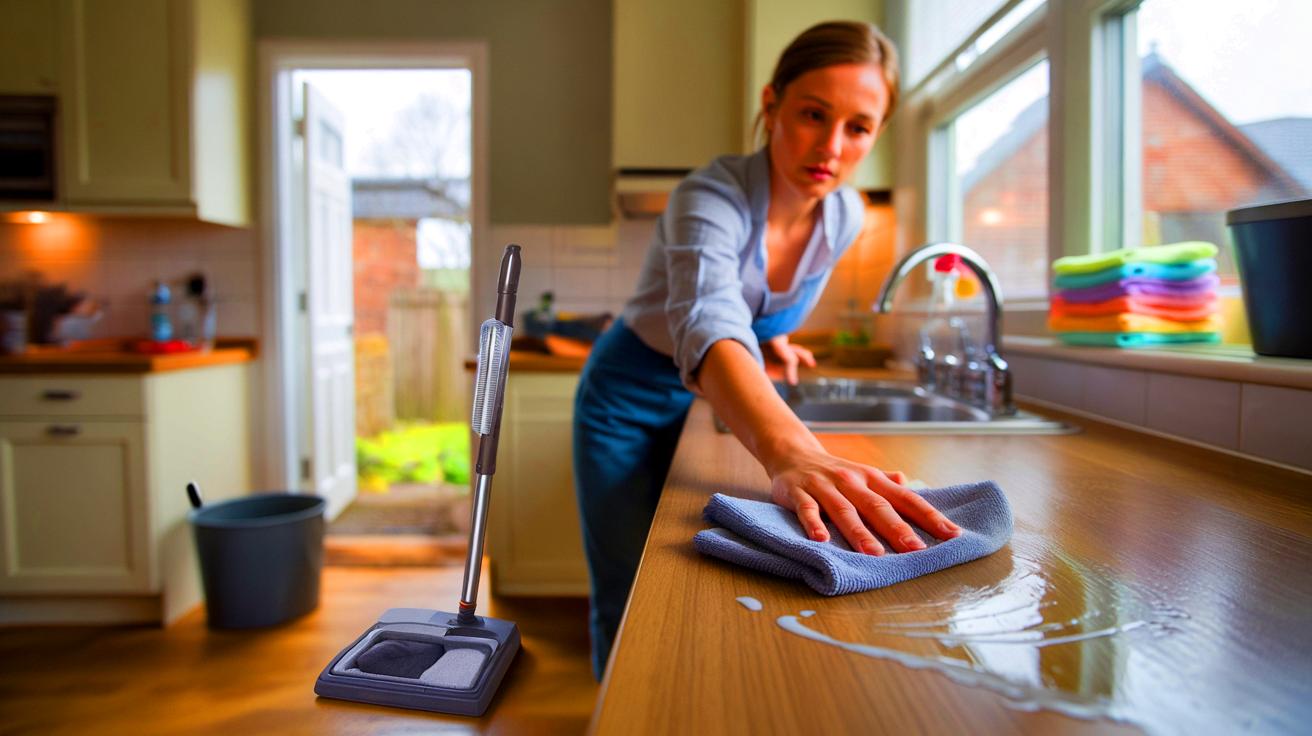
How one cleaning habit is making UK homes dirtier — and the free fix experts swear by
You scrub, mop and spray. The room smells lemony and looks decent. Yet by the next day, counters feel tacky, floors look dull and the bathroom seems to attract grime as if by magnet. Many households think the answer is more product or more elbow grease.
The real problem is simpler and far quieter: most people clean with dirty tools. The same cloth, the same mop water, the same sponge you “rinse and carry on” — they’re spreading a thin film of residue and microbes from one surface to the next. It’s a habit that cancels out your efforts, no matter how often you clean.
H2: The quiet mistake: cleaning with dirty tools
Reusing a cloth that’s already damp and grey is like washing dishes in yesterday’s bathwater. You’re not just moving visible dirt; you’re redepositing a mix of soap residue, oils and microscopic bacteria. It’s why sinks never quite smell fresh, mirrors streak no matter how carefully you buff, and kitchen worktops feel sticky within hours.
Mop buckets are another culprit. Once the water turns cloudy, every pass reintroduces grime into grout lines and across skirting boards. The same goes for vacuum cleaners with clogged filters, which simply blast fine dust back into the room. You can work for hours and still end up with a home that doesn’t feel clean because the tools themselves are quietly undoing the work.
H2: The science you can’t see: residue and microbes
Two forces are at play. First, moisture and warmth turn cloths, sponges and mop heads into microbe hotels. Studies have repeatedly found kitchen sponges among the germiest items in the home. A damp cloth left in the sink or draped over a radiator can teem with bacteria within hours. When you wipe with it, you’re seeding surfaces with whatever grew there.
Second, leftover cleaner forms a film that attracts dirt. Overuse of detergent — or not rinsing properly — leaves surfactants behind. Those sticky molecules cling to airborne dust, skin oils and cooking residues, so your “clean” surface becomes a dust magnet. It’s why floors feel gummy after mopping and why taps look smeary despite constant attention. Cleaners must either be wiped away with clean water or used so sparingly that no residue remains.
H2: The free fix: start clean, finish cleaner
The simplest corrective costs nothing: begin every session with fresh tools and end with them dirty. That means a clean cloth for each zone, fresh mop water the moment it clouds, and a vacuum that actually traps dust rather than recirculating it. Professional cleaners swear by colour-coded cloths — one for the kitchen, one for bathrooms, one for living spaces — because it stops cross-contamination without thinking.
Wash microfibre cloths and mop pads at 60°C with a standard detergent and no fabric softener. Fabric softener coats fibres and kills the grabby texture that lifts dirt. Air-dry them fully; a damp pile becomes a petri dish. Sponges are best replaced frequently or run through a hot dishwasher cycle daily. If you use a string mop, detach and launder the head after each heavy use. For flat mops, swap pads as you move from kitchen to hallway to bath.
H3: A kitchen routine that actually leaves things cleaner
In the kitchen, the dishcloth is the biggest saboteur. Many people wipe a spill, rinse the cloth under cool water and keep going. That rinse doesn’t remove fats or microbes, so each pass spreads an invisible film that later traps dust and crumbs. Adopt a one-cloth-per-task mindset: one for washing up, one for worktops, one for appliances. Retire them to the laundry the moment they look or smell off.
Pre-clean cooking splatters with warm water and a drop of washing-up liquid to remove grease, then apply your surface spray only if needed. Let it sit for the time stated on the label — contact time matters — and finish with a quick rinse or a pass with a barely damp, clean cloth. Handles, switches and the fridge door benefit from that same sequence. Your counters will feel crisp rather than sticky, and you’ll find you need less product.
H3: A bathroom routine without the bounce-back
Bathrooms notoriously “bounce back” to grubby. The fix is order and separation. Start with the mirror and basin using a clean cloth, then move to the shower or bath, and save the toilet for last with a separate cloth that never leaves the loo zone. If you’re using a disinfectant, remove toothpaste and soap first so the chemistry can work, then allow the stated dwell time.
Drying matters. Wipe off excess moisture from taps and screens with a clean, dry cloth at the end; hard water in many UK regions leaves limescale that traps soap scum and dulls surfaces. For toilet brushes, avoid letting them sit in dirty water. After use, flush clean water over the brush, spray with disinfectant, then let it drip-dry between the seat and bowl or over the rim before returning it to a holder. A dry brush is far less likely to harbour odours.
H3: Floors and textiles that don’t feel grubby a day later
Floors suffer most from dirty water. If you can’t see the bottom of the bucket, you’re repainting the floor with diluted soil. The two-bucket method solves this: one for clean solution, one for wringing dirty water. Swap the solution whenever it goes cloudy. On wood and laminate, use a lightly damp microfibre pad rather than a sloshing mop; moisture left behind seeps into joints and raises grain.
Vacuum filters and bags deserve more attention than they get. A blocked filter reduces suction and spews fine dust. Empty bags before they’re bulging and wash or replace filters on schedule. For households with allergies, a sealed machine with a HEPA filter keeps what you collect inside. Door mats, pet blankets and throws quietly hold onto grit and hair; wash them regularly so you’re not endlessly recirculating debris.
H2: What about disinfectants?
Disinfectants have their place, especially on high-touch points and when someone in the house is ill. The mistake is to spray and wipe immediately, which sanitises rather than disinfects. The label’s contact time is not marketing; it’s how long the fluid needs to sit to do the job. Pre-clean visible soil with detergent first so the disinfectant touches the surface, not the grime.
Equally, don’t mix chemicals in search of extra power. Bleach and acids (including vinegar and many limescale removers) can create harmful gases. If you prefer gentler products, remember that physical removal — using a clean, damp microfibre cloth — is incredibly effective. Microfibre’s split fibres lift and trap dirt so you’re not just spreading it around.
H2: The little habits that keep a home genuinely clean
Several small behaviours protect the work you’ve done. Hang cloths to dry immediately after use rather than draping them over the tap or leaving them bunched in the sink. Store a small stash of clean cloths in each zone so it’s easier to reach for a fresh one than to reuse a damp rag. Ventilate rooms after cleaning; a quick open-window session helps surfaces dry faster and reduces that tell-tale film.
Think about direction too. Clean from the highest, cleanest areas to the lowest, dirtiest ones, and from the back of the room towards the exit. That way you’re not stepping over wet floors or flicking dust onto areas you’ve finished. And give your tools a standing appointment in the wash. A weekly 60°C cycle for cloths and mop pads is often enough for low-traffic homes; busy kitchens and bathrooms may need more frequent turns.
H2: Why this matters more than buying a “better” product
It’s tempting to blame lacklustre results on the spray bottle. Yet the most powerful detergents can’t help if your cloth is hosting yesterday’s mess or if you’re layering residue on top of residue. Professional cleaners achieve quick, sparkling results not because they use exotic formulas, but because they follow a strict sequence and keep tools immaculate. Start with clean tools, use only as much product as needed, rinse or wipe away residue, and leave surfaces dry.
The payoff is immediate. Kitchens feel smoother under hand, bathrooms stay bright longer and floors don’t look tired the next day. More importantly, you reduce the silent spread of microbes from the loo to the light switch to the chopping board. For UK households looking to save time and money, this switch is as practical as it gets. You’re not cleaning harder; you’re cleaning smarter — and your home will finally behave like it.

- How everyday cleaning mistakes are quietly damaging kitchens and bathrooms across the UK - January 20, 2026
- Why hidden dirt in British homes keeps coming back no matter how often people clean - January 20, 2026
- How a small change in your cleaning routine can dramatically reduce dust, odours and long-term damage - January 20, 2026
I always thought more product meant cleaner. Turns out my grimy mop was the villain.
Is there a rule of thumb for how often to change mop water?
Finally someone says it: the dishcloth is the saboteur. 😅
Colour-coded cloths changed my life in a rental with hard water.
This sounds like common sense, but I needed the reminder.
What temp shoud microfibre be washed at? I don’t want to ruin them.
Great read—explains the sticky floor mystery after mopping.
I’m sceptical. I rinse my sponge and it’s fine? 🤔
Two-bucket method is elite. My grout stopped looking muddy.
Please can you list HEPA vac brands that actually seal properly?
‘Begin with fresh tools and end with them dirty’ is a brilliant mantra.
Does fabric softner really kill the grabby texture? I had no idea.
I feel personally attacked by the grey cloth description. 😂
We’ve been disinfecting wrong this whole time—contact time matters!
Mixing bleach and vinegar gave me a cough once. Don’t do it, folks.
The bathroom ‘order and separation’ tip is gold.
Short, sweet, and practical. Thanks.
So… throw out sponges more often, right?
I started air-drying cloths and the smell vanished.
Does 60°C also handle mildew spores?
Our vacum spits dust; turns out the filter was clogged. Oops.
If it smells lemony but still feels tacky, you’re not done.
This is why I prefer microfibre over paper towels.
Any tips for student housing where laundry access is limited? 🙃
My partner thinks I’m mad rotating cloths. I feel vindicated now. 🙂
‘If you can’t see the bottom of the bucket…’ best line.
What about steam mops—do they avoid the dirty water issue?
I’ve been draping the cloth over the tap. Bacteria party, apparenlty.
Contact time gets ignored because the lable text is tiny.
The fridge handle is always the sneaky gross spot.
Tried this routine today and the counters feel crisp, not sticky. 😍
Do coloured cloths actually prevent cross-contamination or is it just habit training?
UK hard water is the devil; drying taps immediatly really helps.
How often do you replace a toilet brush? Seems icky forever.