
How everyday cleaning habits quietly feed mould, odours and costly damage at home — how to stop it
You spray, scrub and wipe expecting a fresher, safer home. Yet some of the most common cleaning habits quietly lock in moisture, spread spores and leave behind residues that feed mould and stale odours.
The good news is that small changes in sequence, tools and timing can flip the script. The aim is less about stronger products, more about smarter technique and faster drying.
Moisture is the real mess: are you unintentionally trapping it?
Mould needs moisture, a food source and still air. Routine cleaning can deliver all three when surfaces are left damp, rooms aren’t aired and products leave sticky films that dust clings to.
Many people mop floors last thing at night, then close doors and windows. That warm, sealed air lingers over a wet surface for hours, which is perfect for mould in grout lines and skirting boards. Cleaning earlier in the day, with windows cracked and the heating or a fan moving air for 20 to 30 minutes, changes everything.
Bathroom habits that backfire
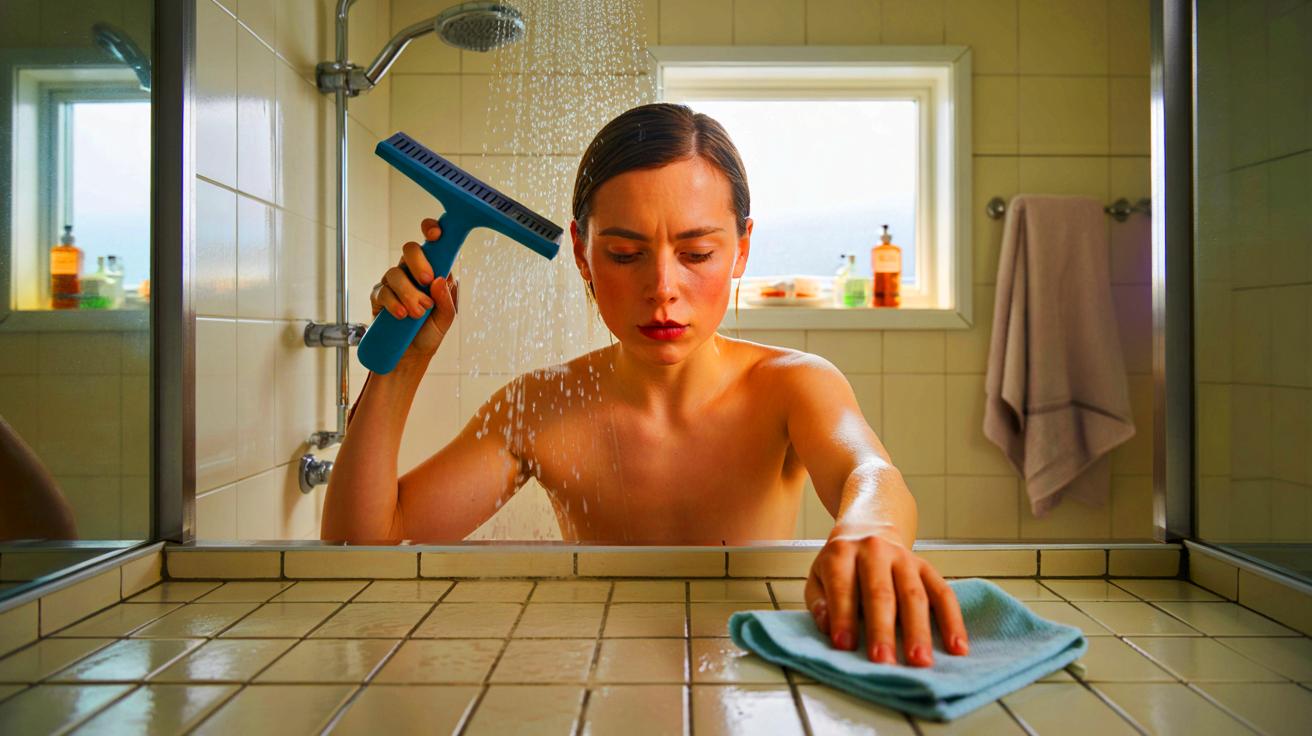
Showers create intense humidity. Wiping tiles with a single damp cloth can simply smear body oils and soap scum, feeding mildew in grout. A better order is to remove the moisture first, clean, then dry again.
Start by squeegeeing glass and tiles so there’s less water to trap. Clean with a mild detergent or bathroom cleaner, agitate, then rinse well. Finally, dry with a clean microfibre cloth. Leave the door open, run the extractor fan for at least 20 minutes and wash bathmats frequently at 60°C to kill odour-causing bacteria.
Bleach isn’t the cure-all you think it is
Bleach can whiten black spots but often fails to penetrate porous grout or silicone, so the mould returns. It can also damage some seals and corrode metal fittings. On grout, a detergent clean followed by 3% hydrogen peroxide left for 10 minutes, then rinsed and dried, is more effective for light staining.
If silicone is colonised, replacement is often the only fix. Whatever you use, never mix bleach with acids or ammonia, ventilate well and wear gloves. For widespread growth or if you’re unsure of the cause, professional help is warranted.
Kitchens: the hidden places smells start
The sink area, dishwasher and fridge quietly collect the films that drive odours. Wiping the sink with disinfectant without removing grease first can leave a residue the nose recognises fast. Degrease with washing-up liquid, rinse, then apply a disinfectant to a clean surface and allow the full contact time before a final rinse and dry.
Pull out the fridge gently and clean the drip tray and the coil cover if accessible, where dust and moisture meet. In the dishwasher, remove and wash the filter weekly, wipe the door seal and run a maintenance cycle hot with a dishwasher cleaner monthly. Leave the door ajar after cycles to let steam escape so it doesn’t condense into crevices and breed musty smells.
Rubbish bins and the 30-second trick
Bins develop odours when lids and hinges are ignored. After washing the interior, flip the lid and clean the underside and hinge area with hot soapy water, then dry thoroughly. A dry bin is less attractive to bacteria than a perfumed one.
Laundry and appliances: when “cleaning” feeds mildew
Washing machines develop biofilm in the drawer, seal and drain when used on low temperatures with too much detergent. Overdosing leaves surfactants that trap soil and feed odour. Use the correct dose for your water hardness, run a 60°C or hotter maintenance wash monthly and leave the door and drawer open between cycles.
Avoid leaving wet laundry in the drum; two hours is enough for a sour smell to take hold. Drying laundry indoors without ventilation rapidly raises humidity. If you must, use a dehumidifier nearby and crack a window to keep relative humidity around 40–60 per cent.
Floors and textiles: stop over-wetting and residue
Steam mops can force moisture into wood and laminate, leading to cupping, lifting and cloudy finishes. Unless your flooring manufacturer explicitly approves steam, stick to a barely damp microfibre pad and a wood-safe cleaner, and dry promptly. On tile, too much product leaves a tacky film that collects grime; use a light dilution and rinse.
On carpets and upholstery, over-wetting is a classic mistake. Excess water dissolves old spills and wicks them to the surface, creating brown stains and that telltale damp smell. Use a controlled amount of solution, make extra dry passes, ventilate well and deploy a fan to speed drying. If pet odours persist, enzymes can help, but they still need thorough rinsing and drying to avoid a new residue.
The cloth problem you can smell
Damp sponges and cloths are petri dishes. Wiping a worktop with a musty cloth simply redistributes odour-causing bacteria. Microfibre cloths work brilliantly when they’re clean and dry, so colour-code them by room, swap them often during a session and launder them hot. Avoid fabric softener, which clogs fibres and reduces cleaning power.
Air-dry cloths fully between uses rather than balled up in a bucket. “Dry beats disinfected” is a useful mantra: removing moisture denies microbes the environment they need.
Dust, air and the myth of the quick spritz
Scented sprays are a short-term mask that can cling to dust, making surfaces duller and stickier. Eliminating the source is quieter and lasts longer. Vacuum thoroughly with a sealed machine and HEPA filtration, especially on mattresses, sofas and skirting, where dust mites and their droppings collect.
Work top to bottom so falling dust isn’t resettling on cleaned areas. Change or wash filters on extractors and vacuums per the manufacturer’s guidance. Clean air moves; stale air sits. A few minutes of cross-ventilation, even in winter, pays off by removing moisture and volatile compounds rather than perfuming them.
Chemistry mistakes that etch, corrode and smell
Vinegar is useful, but it etches natural stone like marble and travertine and can dull some grout. On stone, choose a pH-neutral cleaner and keep water to a minimum. Likewise, using harsh scourers on enamel can create micro-scratches that hold grime and odour.
Never layer products hoping for extra power. Mixing acids, bleach and ammonia is dangerous, and even when fumes don’t form, residues can react later. Use the right product, allow contact time, rinse well and dry. It’s simple discipline with big dividends.
Order of operations: the small reset that changes results
Many cleaning frustrations vanish by adjusting the order. Start dry by dusting and vacuuming so you’re not making mud with wet cleaning. Then wash with a suitable detergent, rinse off residues and finish by drying surfaces and flushing the room with fresh air.
Bathrooms benefit from daily micro-maintenance. A 30-second squeegee after showers reduces the weekly scrub, and a quick towel of high-splash areas keeps grout drier. In kitchens, end each session by drying the sink, taps and surrounding edges so limescale and biofilm have less to grip.
Where hidden leaks and micro-gaps fool even tidy homes
Under-sink cabinets, behind toilets and around window frames often hide the first signs of trouble. A musty whiff or slight swelling of chipboard suggests a slow leak. Regularly running your hand along pipes and seals while the water is on can catch damp early. Sealing grout and stone per manufacturer guidance helps, but it doesn’t replace a dry substrate and good airflow.
Fridge and freezer door seals that don’t close tightly cause condensation and odour. Wipe them clean, check for cracks and level the appliance so doors self-close. Tiny maintenance tasks have outsized effects on how clean smells linger.
When to get help
If you’re dealing with widespread mould, persistent stains returning after proper drying, or a smell you can’t locate, there may be a structural moisture issue. Roof leaks, failed silicone behind tiles or insufficient extraction can defeat even impeccable routines. In those cases, diagnostic tools such as humidity meters and thermal imaging used by professionals are worth the call.
None of this demands more effort, only different effort. Prioritise dryness, let fresh air do some heavy lifting and be choosy about products and sequence. Clean less like you’re perfuming a space, more like you’re interrupting the conditions contaminants need. The payoff is immediate: sharper air, fewer black spots and a home that stays cleaner between cleans.

- Why professional cleaners say most people in the UK are cleaning their homes completely the wrong way - January 20, 2026
- How one common cleaning habit is secretly making British homes smell worse instead of fresher - January 20, 2026
- Why thousands of UK households are only now realising their homes are never truly clean despite constant effort - January 20, 2026
Wow, never thought mopping at night could actually feed mould. Time to switch my routine.
Is 3% hydrogen peroxide safe on colored grout, or will it lighten it?
So basically: clean earlier, rinse better, and DRY everything. Love the simplicity. 🙂
I’ve been mixing a little vinegar with bleach… Guess I’ll stop before I gas myself. Yikes.
‘Dry beats disinfected’ needs to be a poster in my laundry room. 😀
Not sure I buy the steam mop warning—mine says safe for sealed wood. Any sources?
Thank you for mentioning fridge drip trays. Found a swamp back there once.
Great read. Could you provide a quick checklist printable?
Do dehumidifiers really make that big a difference, or is ventillation enough?
I’ve always shut the bathroom door after showers. Oops. 😬
Bins lids and hinges! How did I miss that? Took me 30 seconds and the smell vanished. 🙌
This feels like less chemicals, more physics. Airflow FTW. 😄
My husband calls me ‘The Spritzer’. Turns out I’ve been perfuming dust. Lovely.
Is there a way to speed-dry grout after cleaning without damaging it?
Just tried the squeegee-after-shower habit for a week—grout looks cleaner already. ✅
Fabric softener ruins microfibre? That explains why my cloths suddently suck.
I wish more guides explained ‘order of operations’ like this. Makes total sense.
If silicone is colonised, can I spot-treat or is full replacement the only sane choice?
Hot take: most ‘fresh scent’ sprays are just scented stickiness. Hard agree.
Leaving the washer door open feels messy. Any tips when you’ve got curious cats?
I mopped less, dried more, and the weird skirting board smell has gone. Coincidence? 🤞
Bleach is a whittener, not a fixer—such a useful distinction.
What’s the right HEPA rating to look for in a vacuum for dust mites?
My landlord keeps telling me to ‘open a window’, like that’s the cure to everything.
‘Don’t make mud’ by dusting before wet cleaning—why did no one teach us this at school?
Steam mops on laminate ruined my last rental floor. Learned the hard way.
How long should I run the bathroom fan after a hot shower? 20 minutes minimum?
I’m skeptical: does leaving laundry in the drum for 2 hours really cause smells that fast? 🤔
Real talk: my cloth bucket smells like a pond. Going to air-dry them from now on.
Dishwasher filter weekly? I barely do it monthly. No wonder the ‘clean’ plates smelled. 😅