
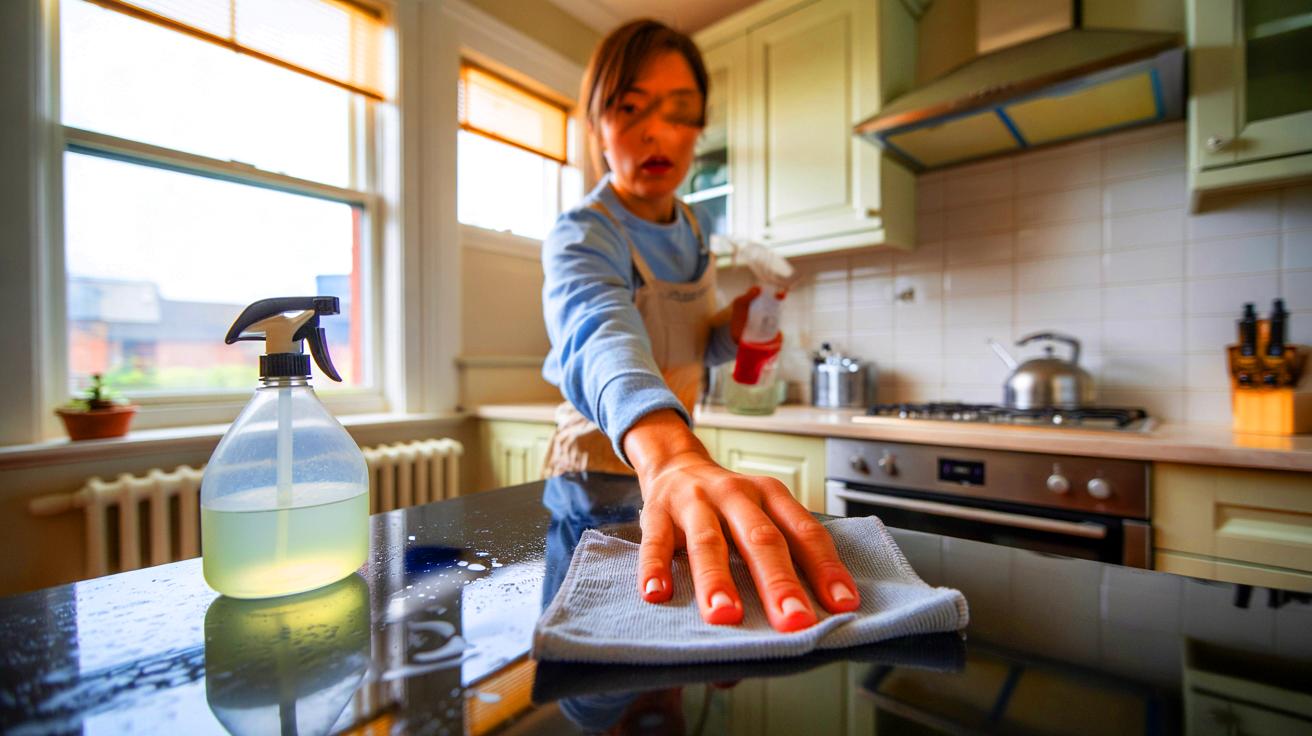
Why thousands of British homes never feel clean — the invisible residue and how to remove it
The floors are mopped, the bathroom gleams, the beds are made — and yet a faint film lingers. Many households recognise that telltale sense that a home doesn’t quite feel clean, even straight after a deep tidy.
The reason, hiding in plain sight, is not the dirt you see but the residue you don’t. In tightly sealed, busy homes, layers of minerals, grease, product build-up and airborne particles quietly settle on every surface. Once you understand where that film comes from, you can remove it — and keep it from coming back.
The real culprit isn’t dirt you can see
Across the UK, several trends have converged. Homes have become more airtight to conserve heat. People are cooking more and spending longer indoors. Social media has pushed heavy use of fragranced products and polishes. In hard-water areas from London to the Midlands, mineral deposits multiply the problem.
Taken together, these create a barely visible coating on worktops, floors and textiles. This coating traps dust, dulls finishes and holds onto odour. You can wipe it away temporarily, but unless you tackle the cause, it returns within days and the room never feels truly fresh.
Hard water turns soap into scum
In much of Britain, water is loaded with calcium and magnesium. These minerals react with soap to form a grey film that sticks to tiles, taps, shower screens and even kitchen sinks. The same chemistry leaves detergent residue on floors and laundry if you dose for soft water without realising.
Many people chase that film with more product or more scrubbing, but the fix is chemical, not brute force. Use less detergent to match your postcode’s water hardness, and finish with an acidic rinse to dissolve mineral deposits. A solution of warm water with a little white vinegar or diluted citric acid cuts limescale and soap scum without harsh fumes. Avoid vinegar on natural stone like marble or limestone; a specialist stone-safe cleaner is safer there.
Airborne grease and scented mists leave a sticky coat
Cooking, especially frying on gas hobs, sends microscopic oil droplets into the air. Candles, wax melts and diffusers add scented compounds that cling to those oils. In poorly ventilated rooms, the particles settle as a slightly tacky film on cupboard tops, skirting boards and window frames.
The surprise for many is just how far kitchen residue travels. I routinely find a fine patina of grease on light fittings in rooms two doors away. The solution is twofold: capture more at source, and remove what’s already there. Run the extractor fan on high from the moment the pan goes on the hob and keep it running for ten minutes after. Once a month, wipe high, rarely touched surfaces with a mild alkaline degreaser, then follow with a plain water rinse so you’re not leaving a sticky layer behind.
The over-cleaning paradox: product build-up that traps dust
It’s counterintuitive, but overusing cleaning products often makes a home feel dirtier. Too much washing-up liquid in a bucket leaves a surfactant film on floors that grabs onto every footstep. Silicone-based polishes promise shine, then become dust magnets by week’s end. Heavy fabric softeners coat towels and bedding, dulling fibres and holding onto odours.
The answer is precision, not zeal. Dilute products exactly as directed. Rinse hard surfaces with clean water after washing. Use polish sparingly and not on high-touch areas like banisters, where skin oils mix with product to create blackened streaks. Reserve fabric softener for synthetics, and skip it on towels, sportswear and microfibre cloths, where it ruins absorbency.
Dirty tools, dirty feel
If your vacuum, mop and cloths aren’t clean, you’re spreading soil around. A vacuum without a HEPA filter, or with a clogged filter, blasts fine dust back into the room, leaving that unsettling “dusty” feel minutes after you put it away. Mops dunked repeatedly into a single bucket reapply greasy residue across the floor. Microfibre cloths washed cool or with softener stop grabbing dirt and start smearing it.
Treat your tools like appliances, not afterthoughts. Wash microfibre at 60°C with a simple detergent, no softener, and air dry. Change mop water frequently or use a two-bucket method so dirty water never touches the floor. Empty vacuum bins after each use and replace or wash filters to maintain suction and stop redistribution of particles. If you have pets or allergies, a sealed HEPA vacuum is worth it; the difference in air feel after a proper slow vacuum is immediate.
Humidity, ventilation and that musty undertone
Moisture makes a clean room feel wrong faster than anything else. Bath steam, drying laundry indoors and tightly shut windows raise relative humidity, creating clammy air and a fertile climate for dust mites and mould. Even without visible mould, a mild mustiness creeps into fibres and soft furnishings.
You don’t need fancy sensors to make a change. Aim for regular short bursts of fresh air: open opposite windows for five to ten minutes to purge a room, even in winter. Keep trickle vents open and use bathroom and kitchen extractors every time you bathe or cook. If towels and bedding are slow to dry, consider a dehumidifier; cutting humidity into the 40–60% sweet spot makes rooms smell brighter and dust settles less readily.
A simple reset that changes how your home feels in a weekend
A “residue reset” is the quickest way to alter the feel of a home. The idea is to remove layers in the right order: degrease what’s greasy, dissolve what’s mineral, rinse what’s soapy, then dry well so nothing lingers to trap dust again.
Start in the kitchen, where airborne grease originates. Wipe cupboard tops, extractor hoods, fridge doors and light fittings with warm water and a small amount of alkaline cleaner or washing-up liquid. Rinse with a clean, well-wrung cloth until surfaces squeak under the cloth, then dry. Replace or wash extractor filters, and if you cook daily, make it a habit to clean the hob and adjacent splashback every night so film doesn’t build.
Move to the bathroom and treat mineral film with acid. Spray or wipe a diluted citric acid or white vinegar solution onto taps, shower glass and tiles, allow a few minutes to act, then agitate and rinse thoroughly. Use a squeegee after showers to stop limescale forming in the first place. On natural stone, use a stone-safe descaler and avoid vinegar; the goal is to remove film, not etch the surface you’re trying to protect.
Tackle floors with a focus on rinsing. Vacuum slowly to extract grit and fine dust, making overlapping passes — it’s time under the head, not just power, that matters. Mop hard floors with a lightly soapy solution, then follow with a second pass of plain hot water to lift any residue. If your bucket water looks grey after a room, change it. Let floors dry fully before walking on them to avoid footprints setting into a tacky film.
Refresh textiles to remove trapped residues and odours. Deep-clean the washing machine by running a hot maintenance cycle with soda crystals or a machine cleaner, and pull out the detergent drawer to scrub away biofilm. Dose laundry detergent to water hardness and load size, not habit, and skip softener on towels and microfibre. For curtains, cushions and upholstery, a slow vacuum with an upholstery tool removes a surprising amount of fine dust that dulls fabric and scent.
Finish by purging the air and the forgotten ledges. Open windows wide while you wipe skirting boards, door frames, the tops of picture rails and radiator fins with a barely damp cloth. These elevated ledges hold the very film that floats back down the moment you finish cleaning. Once dry, close up and notice the difference: surfaces feel bare and crisp under the fingertips, and the room smells neutral rather than perfumed.
How to keep the “just cleaned” feel for longer
Small habits maintain the reset far better than marathon cleans. Cook with the extractor on and lids on pans, and wipe the hob and nearby cabinetry before residue spreads. After using cleaning products on counters or floors, follow with a quick rinse and dry rather than letting product air-dry into a film.
Ventilate strategically. Use ten-minute window purges morning and evening, and run bathroom fans long enough to clear mirrors. Wash microfibre cloths and mop heads hot at the end of cleaning sessions so they are ready to grab dirt next time rather than smear it. Replace vacuum filters on schedule and check for leaks in seals; when a machine recirculates dust, you feel it immediately.
Most importantly, resist the temptation to layer on more fragrance to mask a room that feels stale. Freshness is a function of air exchange, dry surfaces and truly clean fibres, not scent. Strip away films, match your products to your water, keep tools genuinely clean and let clean be the absence of residue. That is the hidden reason so many homes haven’t felt right — and the straightforward way to fix it.

- Why professional cleaners say most people in the UK are cleaning their homes completely the wrong way - January 20, 2026
- How one common cleaning habit is secretly making British homes smell worse instead of fresher - January 20, 2026
- Why thousands of UK households are only now realising their homes are never truly clean despite constant effort - January 20, 2026
So the culprit is residue we can’t see—makes sense. Will switching to citric acid actually protect my chrome fixtures long-term?
This explains why my shower screen looks cloudy again two days after scrubbing. Hard water is a menace 🙁
I thought my vacuum was fine until I washed the HEPA filter… the air felt lighter instantly.
Is vinegar safe on composite sinks? Conflicting advice everywhere.
Love the “residue reset” idea. A weekend plan I can actually follow. 😀
Not sure I buy this—my nan used polish for decades and her place sparkled.
I’ve been over-soaping floors for years. No wonder they’re sticky by evening.
Any tips for renters whose windows barely open? Feels impossible to ventilate properly.
Thank you! Adjusting detergent to water hardness never occured to me.
The section on dirty tools hit home. My mop is basically a grime paintbrush. 😬
This reads like common sense dressed up as revelation.
Can scented candles really leave a film across rooms two doors away?
The extractor-on-early tip is gold. I always waited until smoke showed up.
Dehumidifier game-changer here—cut musty smell in a week. 🙌
We’ve gone product-mad. Less is more, folks.
I’m in Scotland with soft water; do I still need the acidic rinse?
Fun fact: my husband said “it’s clean enough,” then I wiped the skirting boards. Black. Horrifiying.
Hobs, hoods, high ledges—grease triangle I never looked at properly.
Are silicone-based polishes really that bad? Which brands avoid the dust magnet effect?
I swapped fabric softener for white vinegar in the wash and towels actually absorb again. 🙂
Sounds like an advert for dehumidifers tbh.
The two-bucket method changed my life—no grey mop soup anymore. 😄
Can we get a printable version of the weekend reset checklist?
I wish builders didn’t seal every gap. Stuffy flats are a real thing.
“Let clean be the absence of residue.” Pinning that on my fridge.
Anyone else notice their mirrors haze over faster after using room sprays?
Great overview, but where are the citations? Show me studies.
I live by the sea; salt film + cooking grease = nightmare. Any specific cleaners for that combo?
My vacum just redistributes cat fluff. Sealed HEPA it is.
The advice to rinse after using products is so basic, yet I never did it.